
From Ocean Gyres to Economic Design: Why +Nature exists
More than a decade ago, Bonnie Monteleone set sail across four of the world’s five ocean gyres—traveling more than 10,000 nautical miles—collecting some of the earliest microplastic samples, long before plastic pollution became a household phrase. What she encountered was not simply debris floating at sea, but evidence of something far larger: a global system unraveling, particle by particle.
For years, Bonnie worked to raise awareness about plastic pollution through the Plastic Ocean Project, the nonprofit she founded in 2009. Others, such as Captain Andy Schroeder, mobilized heroic cleanup expeditions in remote parts of Alaska. And most of my own work over the last 25 years has been devoted to tracking and reducing plastic waste.
Through conversations with Bonnie and others who share this commitment, we came to understand that plastics are not the root problem; they are a symptom of a fast-paced, globalized society living highly disconnected from the natural world. That realization would eventually give rise to +Nature.
A Question That Wouldn’t Let Go
Collection and cleanup efforts grow, research expands, and public concern increases. And yet, the tide of plastic waste continues to rise. As I stated at the 2019 World Petrochemical Conference, “There is a trickle of recycling compared to a tsunami of plastic production.” From this tension, a deeper question emerged among a cross-disciplinary group focused on declining biodiversity, climate instability, and the waste crisis:
Why—despite better science, better technology, and better intentions—does waste and destruction continue to accelerate?
The answer is uncomfortable and increasingly clear: we are not failing because we lack solutions; we are failing because the economic system rewards the wrong outcomes.
+Nature began as a shared inquiry. From 2019 to 2025, that group convened quietly, connecting economists, ecologists, policy experts, practitioners, data scientists, and storytellers. They gathered evidence, tested ideas, and resisted the urge to rush toward structure before the work itself was ready. Recognizing that nature-based solutions cannot scale without rigorous foundations, the founders embraced a model to guide projects through the critical early stages—assessing ecosystem health, establishing legal and financial structures, designing restoration interventions, and developing measurable, investable natural capital assets.
By providing funding, technical guidance, and monitoring tools, +Nature works to ensure that projects are credible, verifiable, and prepared to participate in voluntary, compliance, and sovereign markets—bridging the gap between early vision and lasting ecological and economic impact.
The People Behind the Work
Bonnie’s leadership is defined by a rare balance of aspiration and practicality, and the people drawn into this effort reflect that same quality. The +Nature community includes public servants who have dedicated decades to protecting people and planet; practitioners working on the front lines of marine debris removal; policy experts shaping regulatory pathways; ethical investors focused on long-term value; artists and musicians translating complexity into culture; farmers and journalists rooted in land and truth; researchers advancing new knowledge; and data leaders working to make invisible systems visible.
Together, they bring something essential to this moment: credibility rooted not in theory, but in lived experience.
Future blogs will spotlight each of the members of the +Nature community—including board members and advisors—who will share their personal stories of what drew them to this vision.
What Good Data Makes Impossible to Ignore
For more than a decade, Stina, the organization I work for, has tracked plastic material flows across North America—exploring what is produced and what is collected for recycling. Our work does not rely on anecdotes or optimism; it relies on data.
In a linear economy, virgin plastic production is structurally advantaged. It benefits from subsidies for fossil fuel extraction, economies of scale that reward volume, and disposal systems that externalize environmental and health costs onto communities and ecosystems. Pollution is cheap because its true costs remain largely invisible.
Recycling, by contrast, must compete in this distorted market while absorbing the real costs of collection, sorting, contamination, labor, and infrastructure. No amount of consumer education or technological innovation can overcome that imbalance. This is why recycling rates plateau—even as public awareness grows and demand for recycled content increases. The system is not broken. It is functioning exactly as designed.
The Plastic Paradox
As global annual plastic production surpasses one trillion pounds, plastics sit at the center of a paradox. Plastics can reduce emissions and fuel consumption through lightweighting and efficiency—yet plastic pollution is actively harming the ecosystems that regulate climate and sustain life.
Rising electricity demand from data centers increases natural gas production, which in turn keeps ethane—polyethylene’s primary feedstock—abundant and cheap. Cheap virgin plastic undermines recycling economics. Artificially low production costs ensure that mismanaged waste continues to find its way into waterways and, ultimately, into our oceans.
Consider the whales. As economist Ralph Chami points out, whales fertilize phytoplankton—microscopic organisms responsible for roughly half of the oxygen we breathe and a significant portion of global carbon sequestration. When plastic pollution harms marine life, the consequences ripple far beyond oceans. As Chami often says, “In economics, every objective requires an instrument.” Without the right tools, even the most urgent goals remain unattainable.
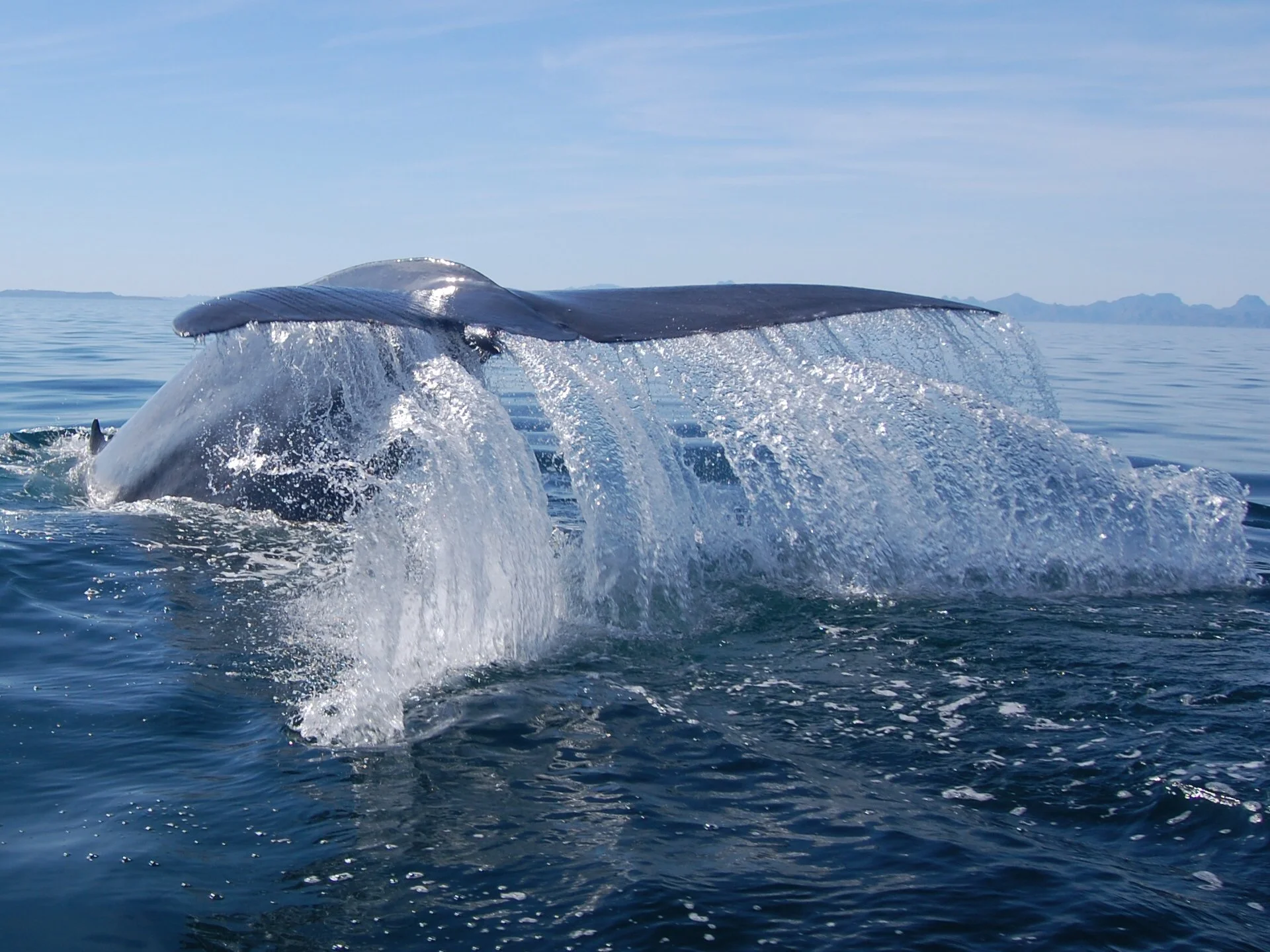
Blue whale sounding. Michael Fishbach photo.
“If humanity continues to treat Earth as an unlimited resource rather than a shared system, the consequences will be universal,” warns astronaut Ron Garan after spending 178 days in space. He describes seeing Earth not as nations or markets, but as one interconnected system. From orbit, there is no “away.” There is only home. And yet, he only made it to space through the use of plastics
Efficiency as an Accelerant
The plastics paradox deepens when viewed through Jevons Paradox—the phenomenon in which efficiency gains lower costs and, rather than reducing resource use, drive higher overall consumption. Plastics illustrate this clearly. Lightweighting and process efficiencies have reduced emissions per unit in some applications, yet those same gains have accelerated production, expanded markets, and normalized disposability at unprecedented scale. Efficiency has become an accelerant—not a brake—within a linear system.
This dynamic shaped negotiations toward the Global Plastics Treaty, an historic effort to address plastic pollution across its full lifecycle—from production and design to use, reuse, and end-of-life impacts, including consequences for human health and ecosystems. Yet a central tension remains unresolved.
The treaty sits between a lifecycle, outcome-oriented vision focused on upstream drivers—such as production volumes, toxic additives, and product design—and a downstream, management-oriented approach centered on waste handling, recycling, diversion, and energy recovery.
This distinction matters. A treaty that prioritizes managing waste over preventing its creation risks reinforcing the very system it seeks to change. Claims that landfill gas or Renewable Natural Gas (RNG) from plastic waste represent circular progress exemplify this risk. While energy recovery may capture residual value, it can also stabilize demand for waste—another expression of Jevons Paradox—reducing pressure to cut production at the source.
From a health and ecological perspective, plastic pollution is a lifecycle problem, not an end-of-life one. It manifests in extraction zones, manufacturing corridors, frontline communities, waterways, and ecosystems whose regulatory functions are quietly undermined.
This is where +Nature’s principles offer a correction. By treating nature as living infrastructure and centering whole-system valuation, +Nature emphasizes prevention, reduction, and regeneration over efficiency alone. True circularity begins upstream—aligning economic design with what sustains life, rather than what merely manages its decline.
Why Incremental Change Isn’t Enough
+Nature exists to help correct this imbalance. Our role is not to replace existing efforts, but to bridge the missing middle, connecting early-stage, nature-positive projects with the economic frameworks, policy instruments, and financing structures they need to survive and scale. Working alongside foundational data providers like Stina, economists like Ralph Chami, and practitioners across sectors, +Nature focuses on building the tools that realign incentives with life: mechanisms that reward regeneration, internalize true costs, and make sustaining ecosystems economically viable. The goal is not to eliminate plastic overnight. The goal is to redesign the system, so waste is no longer the most profitable outcome.
An Invitation
As +Nature looks to the future, it leans on the experience, resolve, and commitment of its founders—the small group of visionaries who first asked why good intentions could not turn the tide of plastics, the extinction of whales, or the destruction of forests.
The shift away from an economy that values money over life is not a task for any single organization. It is a responsibility that falls on all of us—to ask harder questions, challenge inherited assumptions, and create systems compatible with the living world.
+Nature is an invitation to collaborators, board members, partners, and readers to step into that work together. Beyond rethinking materials, we must also look to ancestral wisdom in redefining our relationship with nature. The goal is not simply to close loops; the goal is to sustain life.
I am honored to serve as an advisor in the early stages of this highly visionary organization.